


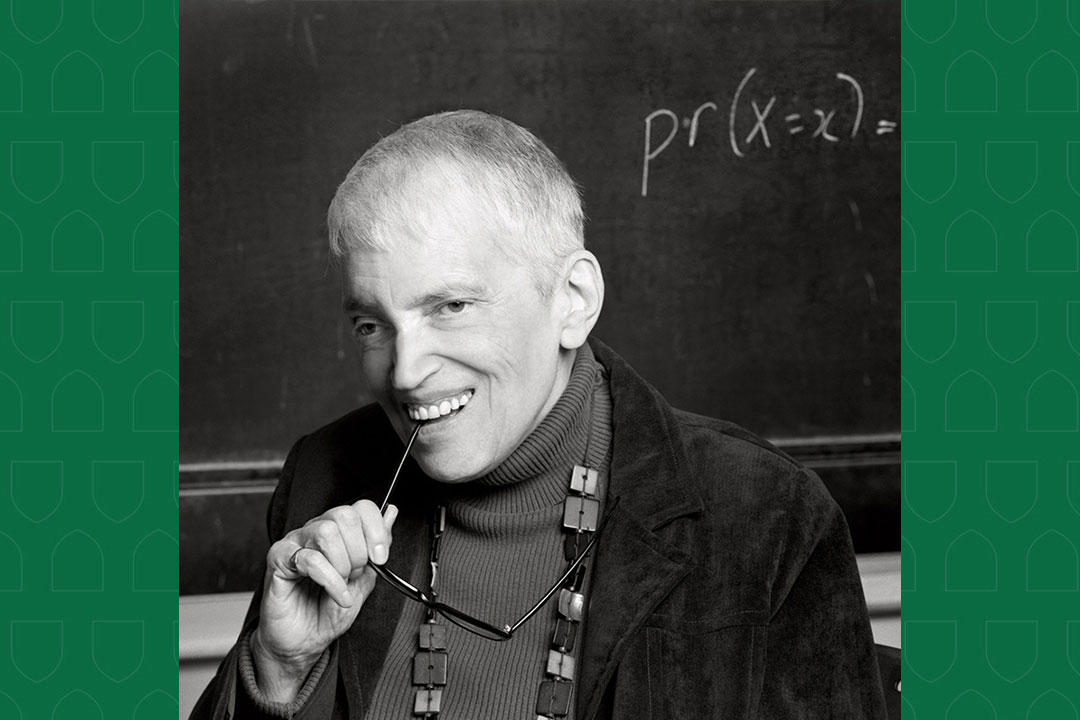
Remembering honorary degree recipient Dr. Agnes Herzberg
USask alumna Dr. Agnes M. Herzberg (MA’63, PhD’66, LLD’18), who was born in Saskatoon, was a highly respected statistician in Canada and around the world
By Shannon BoklaschukThe University of Saskatchewan (USask) is remembering the legacy of Dr. Agnes M. Herzberg (MA’63, PhD’66, LLD’18), a USask alumna and honorary degree recipient who earned international acclaim for her significant contributions to mathematics and statistics.
Dr. Agnes Herzberg passed away in Kingston, Ont., on June 2, 2026, at the age of 87. She was predeceased by her parents—Nobel Prize-winning scientist and USask honorary degree recipient Dr. Gerhard Herzberg (MSc’38, LLD’53) and spectroscopist Luise (Oettinger) Herzberg—and her brother, Professor Emeritus Paul Herzberg (York University).
“On behalf of the University of Saskatchewan, I would like to express our sincere condolences to all who knew and worked with Dr. Agnes Herzberg, and to all who were inspired by her work in the field of statistics,” said USask President Dr. Vince Bruni-Bossio (PhD).
“Dr. Agnes Herzberg and her family had a profound impact on the University of Saskatchewan and the international scientific community, and we are grateful for their many contributions. Through their research endeavours and commitment to scientific exploration, they truly embodied our aspiration to be the university the world needs. In 2018, USask was proud to have the opportunity to recognize Dr. Herzberg by awarding her an honorary Doctor of Laws degree during our Spring Convocation.”
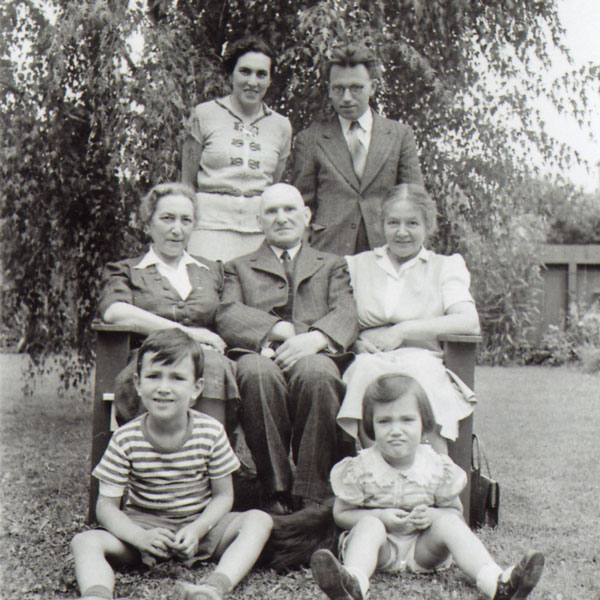
Agnes Herzberg was born in Saskatoon, Sask., in 1938 to German scientists Gerhard and Luise Herzberg, who left Nazi Germany for refuge in Saskatoon. At the time, USask was an unlikely place for a physicist such as Gerhard Herzberg to end up, as the university performed no spectroscopic research. However, within a few years of his arrival, Gerhard Herzberg had built a spectroscopic lab featuring the best instrument in Canada, while Luise Herzberg carried on her own research and assisted her husband with his work while raising their two Saskatoon-born children, Agnes and Paul.
Gerhard Herzberg spent 10 productive years at USask, and three books published during that time are still considered classic works on atomic and molecular structure, advancing knowledge in chemistry, physics, and astronomy. He was widely considered the world’s foremost molecular spectroscopist when he won the Nobel Prize in chemistry in 1971. His work, both at USask and at the National Research Council (NRC) in Ottawa, Ont., revealed the structure of many molecules and the energy they contain—knowledge that has since had a major impact in a wide range of fields, from astronomy to zoology. In his Nobel Prize acceptance speech, Gerhard Herzberg thanked USask, acknowledging “the full and understanding support” of successive USask presidents and faculty who “did their utmost to make it possible for me to proceed with my scientific work.”
After Gerhard Herzberg died in 1999 at the age of 94, the USask Herzberg Fund was established with gifts from many donors who have provided scholarships, fellowships, and travel awards for graduate students since 2004. In 2021, USask and the Canadian Light Source (CLS) announced the naming of the main experimental hall of the CLS and a prominent physics lecture theatre on campus after the renowned scientist. Many of Gerhard Herzberg’s USask students went on to illustrious research careers at the NRC, across Canada, and around the globe, including USask alumnus and honorary degree recipient Dr. Henry Taube (BSc’35, MSc’37, LLD’73), who was born in Neudorf, Sask., and received a Nobel Prize in chemistry in 1983.
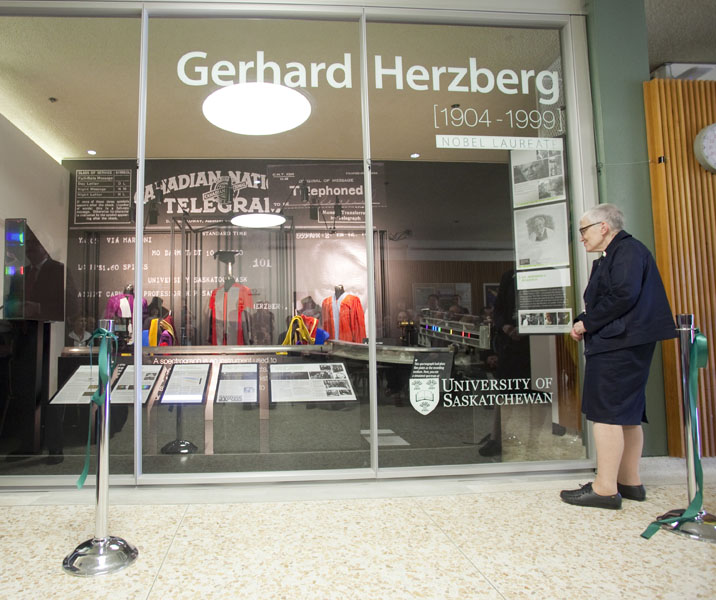
At an event in 2023, the Physics 107 theatre was officially dedicated to Gerhard Herzberg, who was a faculty member in the physics department of USask’s College of Arts and Science from 1935–45. Dr. Agnes Herzberg submitted a letter to be read at the event. “Whenever my father reflected on his scientific journey, he would highlight three attributes that he valued as a scientist: humanity, humility, and humour. On behalf of my father, I hope that these attributes will be ever-present companions to the many scientific journeys that will fill this theatre for years to come,” Agnes Herzberg wrote.
Like her parents, Agnes Herzberg was drawn to a life of research and scientific exploration. While she left Western Canada at an early age, Agnes Herzberg returned often, earning both a Master of Arts degree and a PhD in mathematics at USask, in 1963 and 1966, respectively, after completing her undergraduate studies at Queen’s University.
Dr. Agnes Herzberg began her career with a National Research Council of Canada Post-Doctorate Overseas Fellowship at Birkbeck College and Imperial College of Science and Technology, colleges of the University of London (1966-1968), and then became a lecturer at Imperial College (1968-1988). During these years, she accepted brief engagements at the University of California, Berkeley (1975); the University of Washington, Seattle (1977); and the Mathematics Research Center at the University of Wisconsin, Madison (1981). In July 1988, she was appointed professor at Queen’s University, becoming professor emeritus in 2004.
Following the news of her death, Professor Axel Gandy, head of the Department of Mathematics at Imperial, was quoted in an Imperial article stating that “Professor Agnes Herzberg was a distinguished statistician and a remarkable ambassador for our discipline. Her intellectual contributions, generosity of spirit, and dedication to building academic communities left an enduring mark on Imperial and the international statistical community. Agnes will be remembered with great admiration and affection, and she will be deeply missed by all who had the privilege of knowing and working with her.”
Agnes Herzberg was known for her research on the statistical design of experiments, including contributions to the design of clinical trials in medicine. She worked with many collaborators internationally and, around the time she was awarded an honorary Doctor of Laws degree from USask in 2018, she co-authored a paper examining the noteworthy properties of Sudoku puzzles, including the potential for data compression. She was founding editor of Short Book Reviews, a publication of the International Statistical Institute; during her 26 years of editorship, the journal handled more than 12,500 volumes.
Agnes Herzberg’s participation in the Statistical Society of Canada (SSC) included serving as its first female president and as a member of many committees. Throughout her career she received many honours, including the SSC Service Award in acknowledgement of her leadership, and election in 2008 to the Royal Society of Canada for her pioneering contributions to statistics. Believing that individuals are enriched by exchanges with those in other disciplines, she introduced the idea of inviting scientists and others to statistical conferences. Honouring the memory of her father, Dr. Gerhard Herzberg, the Conference on Statistics, Science and Public Policy is held annually at Herstmonceux Castle in the United Kingdom. In this unique gathering, a diverse mix of scientists, politicians, civil servants and journalists from many countries address significant policy issues.
In her USask honorary degree citation in the Campus History Databases, Dr. Agnes Herzberg was described as “a generous supporter of not only academic but also cultural projects, and her worldwide circle of colleagues and friends represents her far-reaching interests.”
“She is an inspired and inspiring model of loyalty and commitment to the individuals and institutions that have been part of her life,” it read.